Spotting the northern lights is one of the most exciting parts of visiting the Land of Fire and Ice. Many travelers plan their entire trip around catching a glimpse of these emerald ribbons dancing across the night sky.
This guide explains everything you need to know about seeing the northern lights in Iceland, including the basic conditions required and the chances of seeing the aurora during each month of the year.
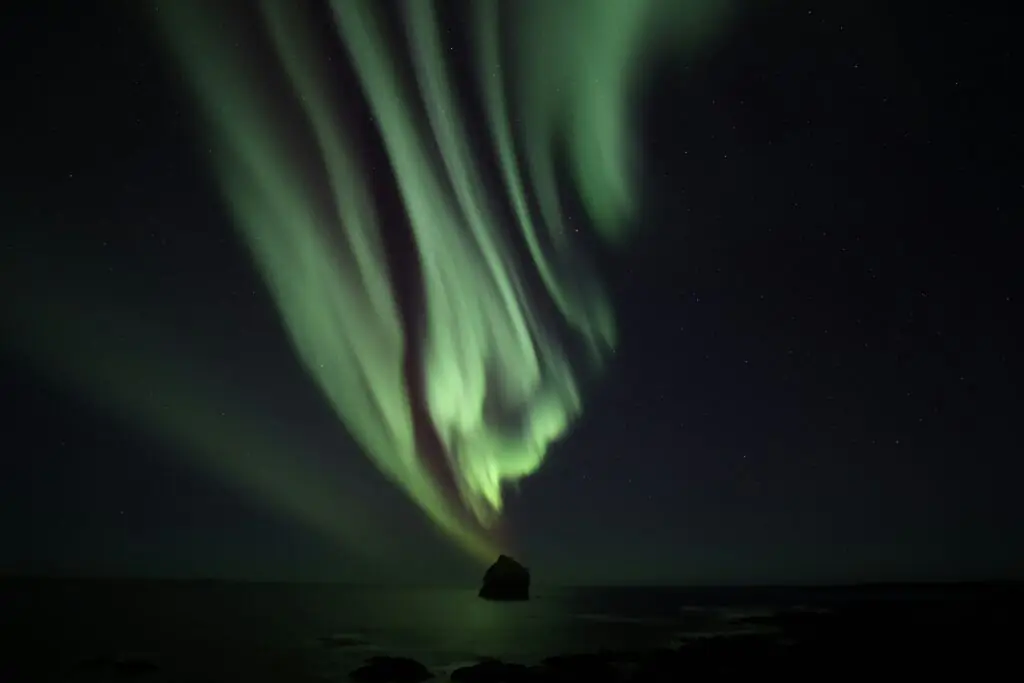
How to See the Northern Lights in Iceland? Basic Conditions
There are a few key conditions required to see the aurora borealis in Iceland. Even during peak northern lights season, these conditions must align.
The main requirements for seeing the northern lights
- Dark skies: The northern lights are only visible when the sky is completely dark.
- Aurora season between September and April: The best time to see the northern lights in Iceland is during the darker months.
- Low light pollution: Viewing locations should be away from city lights for the best visibility.
- A strong aurora forecast: Check the aurora forecast on the Icelandic Met Office website Vedur.is
- Solar activity: High solar wind activity increases the chances of visible auroras.
Even if all these conditions are perfect, there is still a chance you may not see the northern lights due to low solar activity or sudden cloud cover.
Iceland Northern Lights FAQs
- When can you see the northern lights in Iceland?
Technically, the northern lights can be seen from September to May in Iceland. However, the peak season runs from mid-September to mid-April, when nights are darkest and aurora tours operate across the country
- Can you see the northern lights in Iceland in June?
No. It is not possible to see the northern lights in Iceland in June. This is when Iceland experiences the midnight sun, with daylight lasting up to 22 hours around the summer solstice on June 21. The sky never becomes dark enough to see auroras.
- Can you see the northern lights in Iceland in July?
No. The northern lights cannot be seen in Iceland in July because the nights remain too bright due to the midnight sun.
- Can you see the northern lights in Iceland in August?
Generally no. While nights begin to get darker toward the end of August, conditions are usually still too bright for reliable aurora viewing.
- Can you see the northern lights in Iceland in September?
Yes, September marks the beginning of northern lights season in Iceland. Nights become darker, and by the end of the month some parts of Iceland experience up to 15 hours of darkness, creating good viewing opportunities.
- Can you see the northern lights in Iceland in October?
October is a great time for northern lights viewing. Most parts of Iceland experience 8 to 11 hours of daylight, leaving long dark evenings for aurora watching.
- Can you see the northern lights in Iceland in November?
November is an excellent time to see the northern lights in Iceland. Daylight hours are short and darkness arrives early, giving visitors plenty of time to search for the aurora.
- Can you see the northern lights in Iceland in December?
December has the darkest days of the year in Iceland, which creates ideal conditions for aurora viewing. However, winter storms and heavy snowfall can sometimes bring cloudy skies.
- Can you see the northern lights in Iceland in January?
Yes. January is one of the best months for northern lights viewing. With only a few hours of daylight each day, visitors have many opportunities to see the aurora on clear nights.
- Can you see the northern lights in Iceland in February?
Yes. February still offers long dark nights that are perfect for aurora viewing. Days slowly start getting longer, but nights remain dark enough to see the northern lights.
- Can you see the northern lights in Iceland in March?
March is another great month to see the northern lights. The weather often becomes slightly milder while nights are still dark enough for good aurora visibility.
- Can you see the northern lights in Iceland in April?
April marks the end of northern lights season in Iceland. It is still possible to see them early in the month, but by mid-April the nights become too bright and most aurora tours stop operating.
- Can you see the northern lights in Iceland in May?
No. By May, Iceland is approaching the midnight sun period and the nights are no longer dark enough to see the northern lights.
Where Can You See the Northern Lights in Iceland?
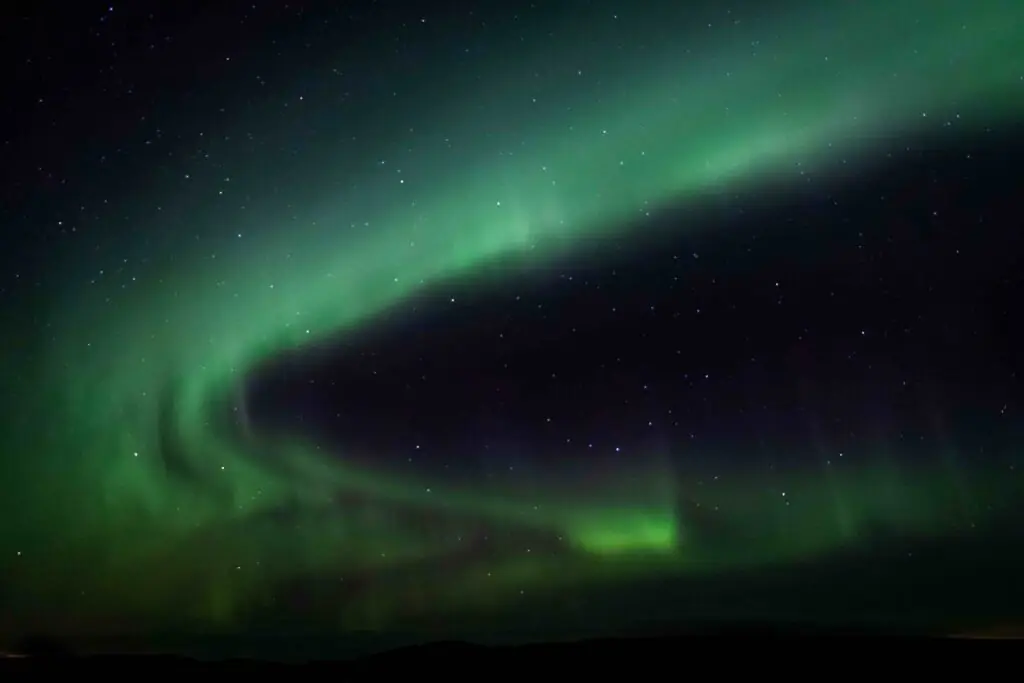
One of the best things about Iceland is that the northern lights can potentially be seen almost anywhere in the country, as long as conditions are right.
For the best chance of seeing the aurora:
- Check cloud coverage forecasts
- Monitor the aurora forecast on Vedur.is
- Find a location with clear skies and minimal light pollution
Driving just a short distance away from cities like Reykjavík can significantly improve visibility.
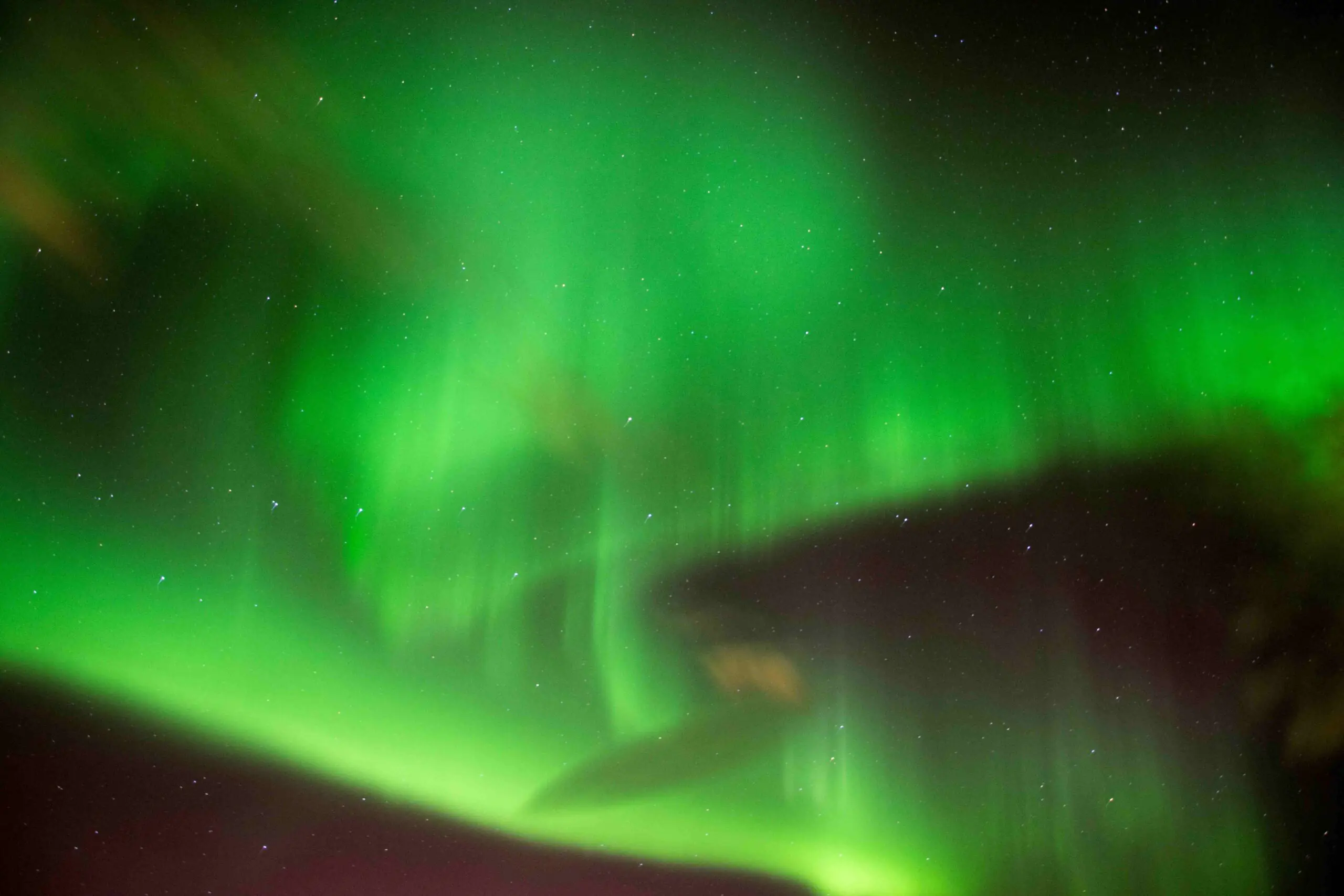
How to See the Northern Lights in Iceland
There are several ways to see the northern lights in Iceland.
Some visitors choose to join guided northern lights tours, while others prefer a self-drive road trip to search for the aurora.
Both options can work well. The most important factors are clear skies, darkness, and patience.
If seeing the northern lights is on your bucket list, renting a car gives you the freedom to drive away from city lights and explore quieter locations where the aurora can be seen more clearly.
With a rental car from Firefly Iceland, you can explore Iceland’s landscapes at your own pace while searching for the magical glow of the aurora borealis.
More Questions About Seeing the Northern Lights in Iceland
- How long do the northern lights last in Iceland?
Northern lights displays can last anywhere from a few minutes to several hours. Sometimes the aurora appears as a faint glow for a short period, while other times it can move and dance across the sky for a long time during strong solar activity.
- What color are the northern lights in Iceland?
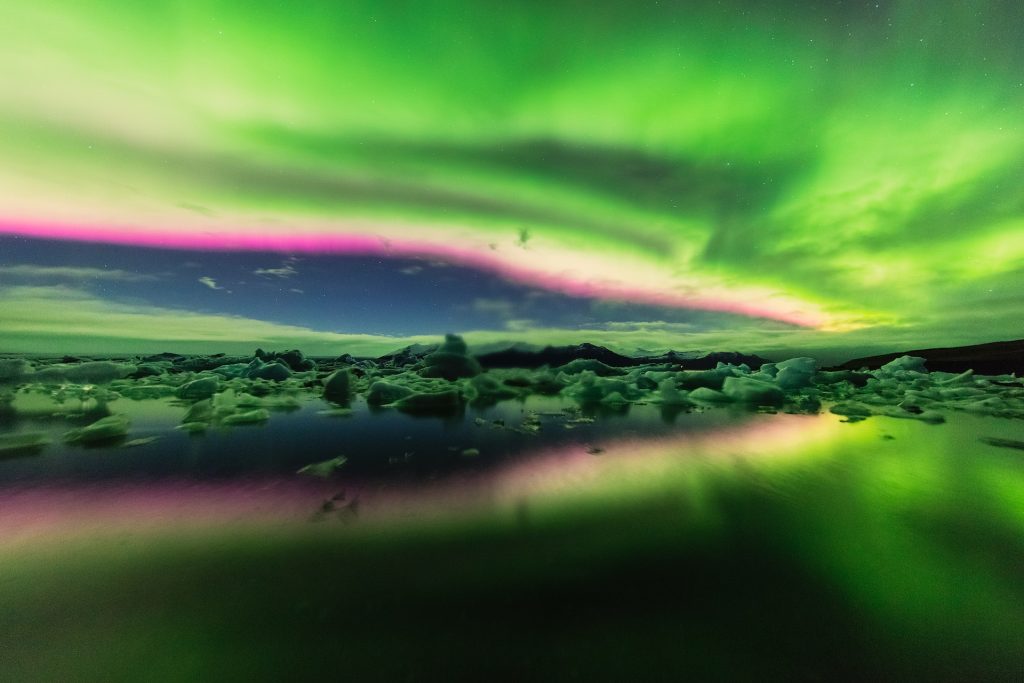
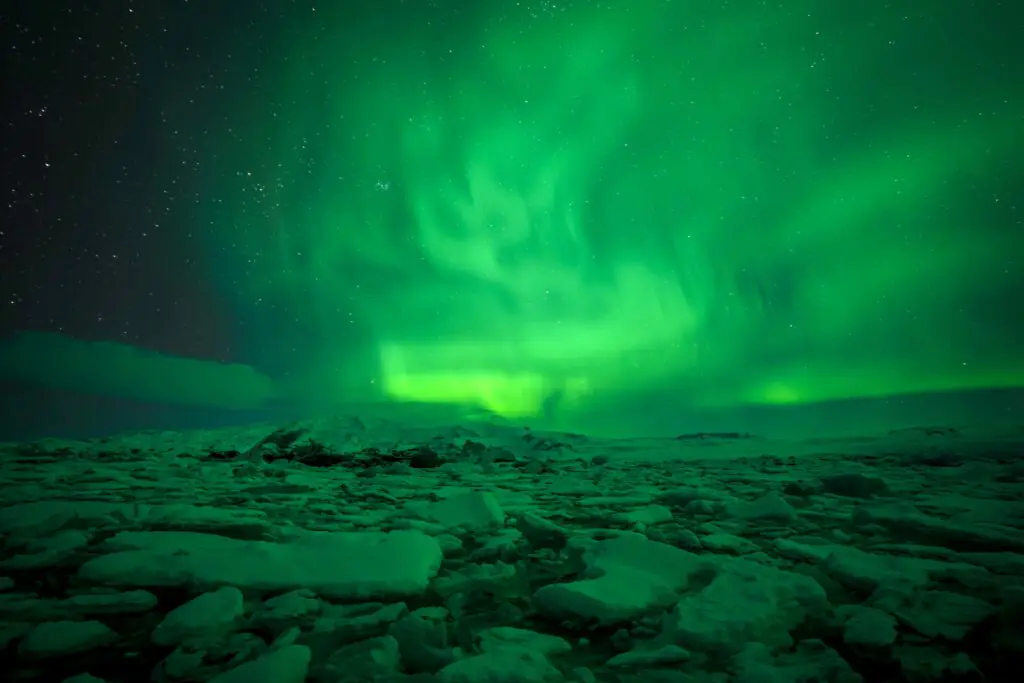
The northern lights are most commonly green, which is caused by charged solar particles interacting with oxygen in the Earth’s atmosphere. During stronger aurora activity, the lights can also appear purple, pink, or red.
- How cold is it when watching the northern lights in Iceland?
During northern lights season, temperatures in Iceland typically range between -5°C and 5°C (23°F to 41°F depending on the month and location. Warm clothing, including layers, and a hat, is recommended when spending time outside at night.
- Do you need special equipment to see the northern lights in Iceland?
No special equipment is required to see the northern lights with the naked eye. However, many travelers bring a camera or smartphone with night mode to capture photos of the aurora.
- How many nights should you stay in Iceland to see the northern lights?
Because the aurora depends on weather and solar activity, it is recommended to stay at least three to five nights during winter to increase your chances of seeing the northern lights.
- What is the cheapest car rental in Iceland?
If you plan to explore Iceland and search for the northern lights on your own, Firefly Iceland often offers some of the most affordable rental cars in Iceland, making it easier to travel to darker locations outside the city.
Conclusion
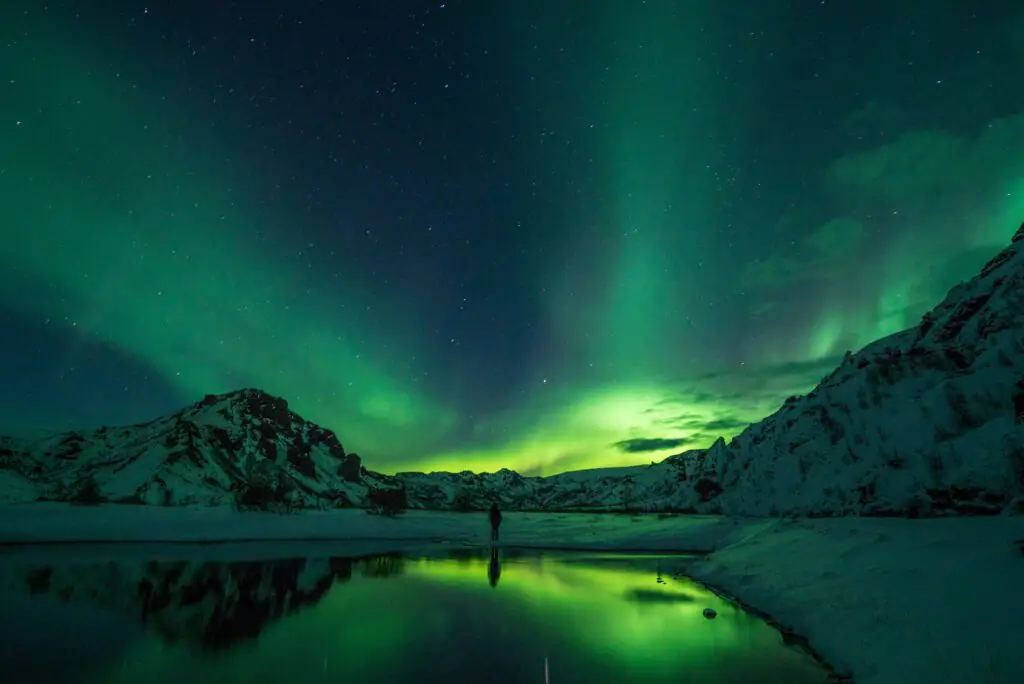
Seeing the northern lights in Iceland is a magical experience that many travelers hope to witness at least once in their lifetime. While the aurora is a natural phenomenon and never guaranteed, understanding the right conditions can greatly improve your chances.
The best time to see the northern lights in Iceland is during the darker months from September to April, when long nights provide the perfect setting for aurora viewing. Choosing locations away from city lights, checking the aurora forecast on Vedur.is, and watching the weather for clear skies can all help increase the likelihood of seeing the lights.
Whether you join a northern lights tour or explore the countryside on a self-drive road trip, patience and flexibility are key. With a little planning and the right conditions, you might be lucky enough to see the incredible glow of the aurora borealis lighting up Iceland’s night sky.
If you want the freedom to travel beyond city lights and search for the best viewing spots, renting a car with Firefly Iceland Car Rental makes it easy to explore the country and experience the beauty of Iceland at your own pace.