If you’re planning a trip to Iceland, one of the first questions you might ask is: What language do they speak in Iceland?
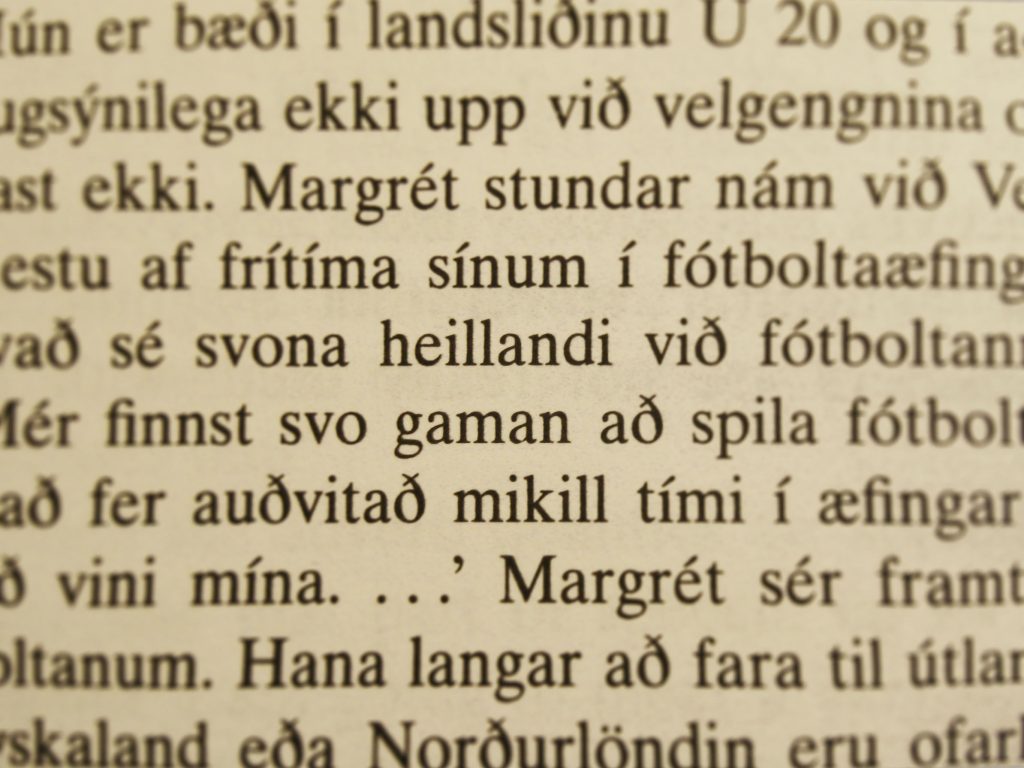
The official language of Iceland is Icelandic. It’s a unique Nordic language that has remained remarkably close to Old Norse, the language spoken by the Vikings who settled Iceland in the 9th century.
But don’t worry, if you speak English, you’ll have no problem communicating during your trip.
Here’s everything you need to know about the Icelandic language before your Iceland road trip.
The Official Language of Iceland: Icelandic
Icelandic is a North Germanic language, closely related to Faroes and distantly related to Norwegian, Danish, and Swedish. What makes Icelandic special is how little it has changed over time.
Unlike many modern European languages, Icelandic has preserved much of its original structure and vocabulary from the Viking Age. In fact, modern Icelanders can still read medieval texts like the Sagas with relatively little difficulty.
That’s over 1,000 years of linguistic continuity.
Key Facts About the Icelandic Language
- Icelandic Has Hardly Changed Since the Viking Age
- Icelandic developed from Old Norse, brought by settlers in the 9th and 10th centuries. Because Iceland was geographically isolated, the language evolved very slowly compared to mainland Scandinavian languages. This linguistic stability is one of the reasons Iceland’s cultural identity remains so strong today.
- Icelanders Create New Words Instead of Borrowing Them
- Instead of using words from another language to add a new word to the Icelandic dictionary, Icelanders typically create their own using bits from Icelandic.
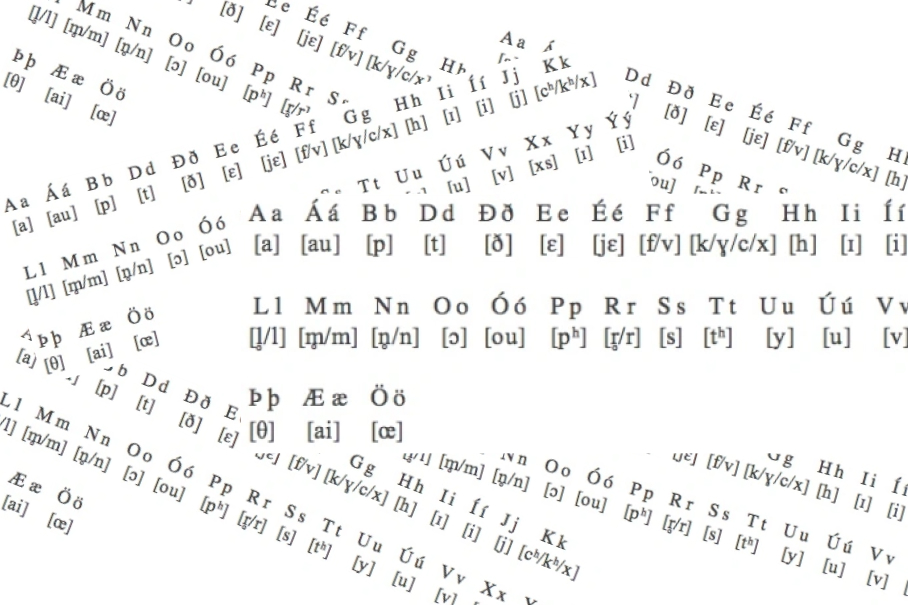
- The Icelandic alphabet has unique letters.
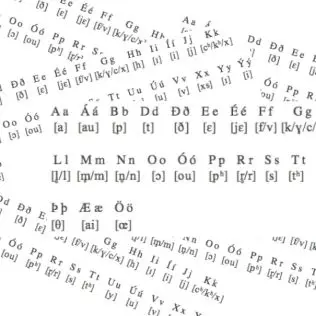
- The Icelandic alphabet contains 32 letters. Several are not found in English, including: á, æ, ð, é, í, ó, ö, þ, ú, and ý. Icelandic does not use the letters c, q, w, or z in native words. Two especially unique letters are: Þ (thorn) and Ð (eth). These letters are direct links to Old Norse.
- Icelandic Grammar is Complex
- Icelandic grammar includes four grammatical cases, three genders, verb conjugations, and both strong and weak declensions, but for travelers is it not necessary to learn these in depth, as even using a few basic phrases will be appreciated.
Do Icelanders Speak English?
Yes, almost everyone in Iceland speaks English.
English is taught in schools from a young age, and it’s estimated that over 90% of Icelanders are fluent or conversational in English
If you’re visiting Reykjavík or other major towns like Akureyri or Selfoss, you will have zero issues communicating.
Even in smaller villages along the Ring Road, most locals speak at least some English. Anyone working in tourism, including hotels, restaurants, and car rental companies, will speak fluent English.
So if you’re planning a self-drive trip in Iceland, there’s no need to worry about a language barrier.
- Read more English blogs about things to do in Iceland .
Firefly Iceland Car Rental: No Language Barrier
At Firefly Iceland Car Rental, all staff speak excellent English.
Whether you’re picking up your rental car at Keflavík International Airport (KEF) or asking for local travel tips, you’ll receive clear explanations and friendly service.
Need advice on:
- Driving in Iceland?
- Road conditions?
- F-roads vs regular roads?
- Winter tires?
- The best stops along the Golden Circle or South Coast?
You can ask in English with confidence.
Renting a car in Iceland gives you full flexibility to explore, and language will never slow you down.

How to say Hello in Icelandic? Useful Icelandic Phrases
Even though English is widely spoken, learning a few Icelandic words is a nice gesture.
Here are some simple Icelandic phrases to know before visiting Iceland:
Hello = Halló
Goodbye = Bless
Thank you = Takk fyrir (or simply, Takk)
Yes = Já
No = Nei
Good Morning = Góðan daginn
Good Evening = Gott kvöld
My name is… = Ég heiti…
Does Iceland Have Dialects?
Interestingly, Iceland has very little regional variation in speech. Unlike many countries where accents and dialects change dramatically between regions, Icelandic is largely uniform across the country.
Whether you’re in Reykjavík, the Westfjords, North Iceland, or along the South Coast, the language is spoken in nearly the same way.
Icelandic Sign Language
Iceland also recognizes Icelandic Sign Language as an official minority language. It plays an important role in communication within the Deaf community.
This reflects Iceland’s strong cultural commitment to language preservation and accessibility.
Why the Icelandic Language Matters
The Icelandic language is more than just a way to communicate, it’s central to Iceland’s identity.
Language preservation is taken seriously. Iceland has language committees that actively create Icelandic alternatives for new technological terms instead of importing foreign words.
In many ways, Icelandic is a living connection to the country’s Viking past.
FAQ: Language in Iceland
- What language do they speak in Iceland?
The official language of Iceland is Icelandic, a North Germanic language derived from Old Norse.
- Do Icelanders speak English?
Yes. The vast majority of Icelanders speak fluent English, especially in tourist areas and service industries.
- Is is necessary to learn Icelandic before visiting Iceland?
No. English is widely spoken, and you can travel comfortably without knowing Icelandic.
- Are there dialects in Iceland?
Very few. Icelandic is spoken almost uniformly throughout the country.
- Is Icelandic difficult to learn?
Yes, Icelandic grammar can be complex, with multiple cases and genders. However, learning a few basic phrases is easy and appreciated.
- Will I have trouble renting a car if I only speak English?
No. All major car rental companies, including Firefly Iceland Car Rental, provide full service in English.

Conclution
So, what language do they speak in Iceland?
Icelandic is the official language, a fascinating Nordic language that has remained remarkably close to its Viking roots.
But for travelers, English is spoken almost everywhere, making Iceland one of the easiest countries in Europe to visit.
Learning a simple “Halló” or “Takk” is a thoughtful touch, but you can confidently plan your Iceland road trip without worrying about communication.